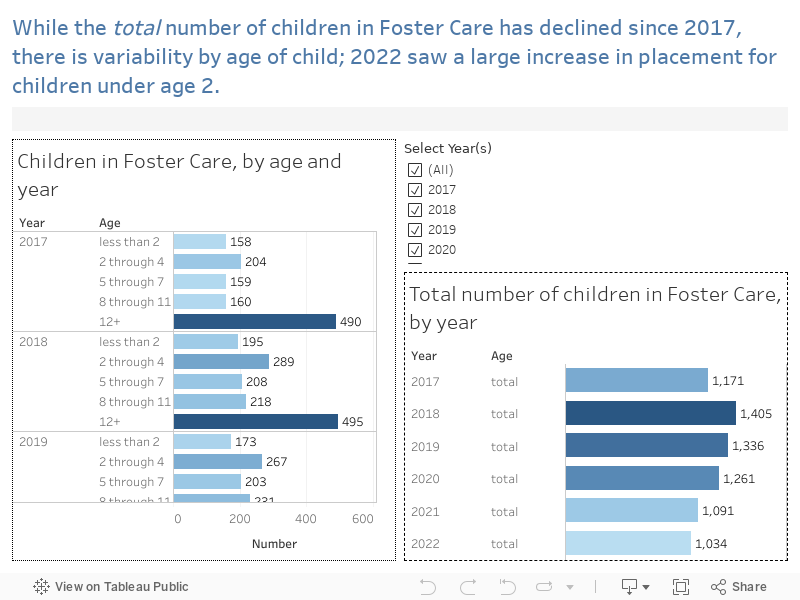
Foster Care

  • Child and Family Programs and Policy
  • Foster Care     Data Source & Notes  
  •  Previous: WIC
  • Next: School Meals 

Definition: This indicator reports the number of children, by age, in foster care.

Data source:

U.S. DHHS, Administration for Children Youth and Families, Child Welfare Outcomes Data. Main data site is here. New Hampshire specific data is here. Scroll to see data from Adoption and Foster Care Analysis and Reporting System (AFCARS), Foster Care File. The Foster Care file includes but is not limited to numbers entering and exiting foster care; their outcomes, ages, race/ethnicity, and associated lengths of time in care

with support from
Endowment for Health

Data Indicators by Category

  • Family
  •  Child Population by Age and Race
  •  Household Composition
  •  Family Structure
  •  Educational Attainment of Families
  • School
  •  Children Enrolled in Kindergarten
  •  Statewide Assessments
  • Early Learning
  •  Cost of Child Care
  •  Child Care Cost Burden
  •  Child Care Program Staff Salaries
  •  Licensed Child Care Capacity
  •  Head Start and Early Head Start
  •  Head Start Programs Map
  •  Children Enrolled in Preschool
  • Work
  •  Children under 6 With Working Parents
  •  Job Change Due to Child Care Problems
  •  Living Wage
  •  Median Income of Families with Children
  •  Labor Force and Unemployment
  • Housing
  •  Housing Instability
  •  Homeless Children
  •  Home Ownership
  •  Purchase Price of Homes
  •  Rental Costs
  • Health
  •  Birth Data
  •  Developmental Screening
  •  Immunizations
  •  Health Insurance Status
  •  Maternal Health
  •  Oral Health
  •  Child Maltreatment
  • Family Supports
  •  Family and Community Health Programs
  •  NH Birth to 3
  •  Parents Experiencing Aggravation From Parenting
  • Social/Economic Factors
  •  Food Insecurity
  •  Child Poverty
  •  Children in Low Income Families
  •  Children Under 6 Living Below 200% of Poverty
  • Community Health
  •  Childhood Lead Exposure
  •  Access to Clinical Care
  •  Access to Mental Health Services
  •  Access to Needed Health Services
  • Child & Family Programs
  •  Medicaid and CHIP
  •  TANF
  •  SNAP
  •  WIC
  •  Foster Care
  •  School Meals