Oral Health

  • Health
  • Oral Health     Data Source & Notes  
  •  Previous: Maternal Health
  • Next: Child Maltreatment 

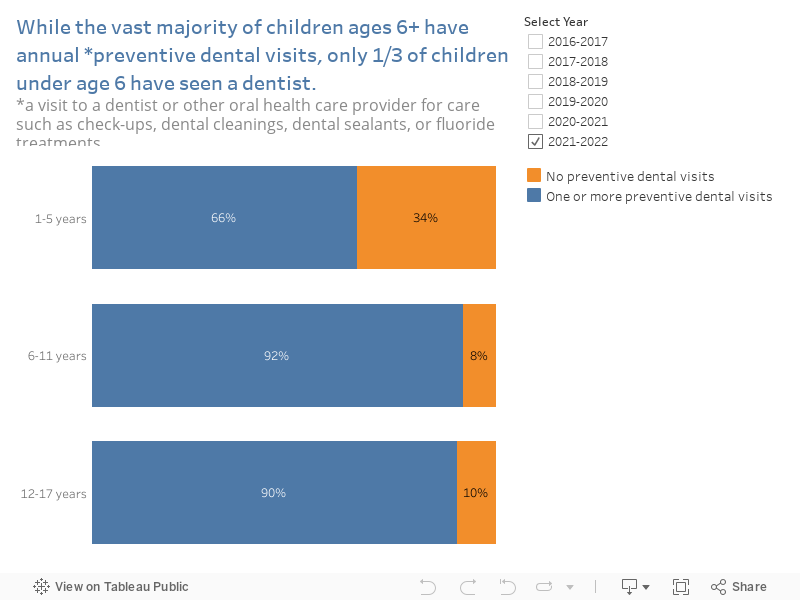
Because the mouth is the gateway to the body, oral health is essential to overall health. Dental decay is caused by an infection and, left untreated, can lead to pain, problems concentrating in school, as well as other health problems.

The American Academy of Pediatric Dentistry (AAPD) recommends that a child go to the dentist by age 1 or within six months after the first tooth erupts. "Baby teeth" are important for many reasons including the ability to chew properly which aids in good nutrition; teeth are also involved in proper speech development.

Data source:

National Survey of Children's Health, Interactive Data Query Site Indicator 4.2a Preventive Dental Care, Ages 1-17.

Two-year combined data is used as these are more reliable than single year estimates.

with support from

Endowment for Health

Data Indicators by Category

  • Family
  •  Child Population by Age and Race
  •  Household Composition
  •  Family Structure
  •  Educational Attainment of Families
  • School
  •  Children Enrolled in Kindergarten
  •  Statewide Assessments
  • Early Learning
  •  Cost of Child Care
  •  Child Care Cost Burden
  •  Child Care Program Staff Salaries
  •  Licensed Child Care Capacity
  •  Head Start and Early Head Start
  •  Head Start Programs Map
  •  Children Enrolled in Preschool
  • Work
  •  Children under 6 With Working Parents
  •  Job Change Due to Child Care Problems
  •  Living Wage
  •  Median Income of Families with Children
  •  Labor Force and Unemployment
  • Housing
  •  Housing Instability
  •  Homeless Children
  •  Home Ownership
  •  Purchase Price of Homes
  •  Rental Costs
  • Health
  •  Birth Data
  •  Developmental Screening
  •  Immunizations
  •  Health Insurance Status
  •  Maternal Health
  •  Oral Health
  •  Child Maltreatment
  • Family Supports
  •  Family and Community Health Programs
  •  NH Birth to 3
  •  Parents Experiencing Aggravation From Parenting
  • Social/Economic Factors
  •  Food Insecurity
  •  Child Poverty
  •  Children in Low Income Families
  •  Children Under 6 Living Below 200% of Poverty
  • Community Health
  •  Childhood Lead Exposure
  •  Access to Clinical Care
  •  Access to Mental Health Services
  •  Access to Needed Health Services
  • Child & Family Programs
  •  Medicaid and CHIP
  •  TANF
  •  SNAP
  •  WIC
  •  Foster Care
  •  School Meals